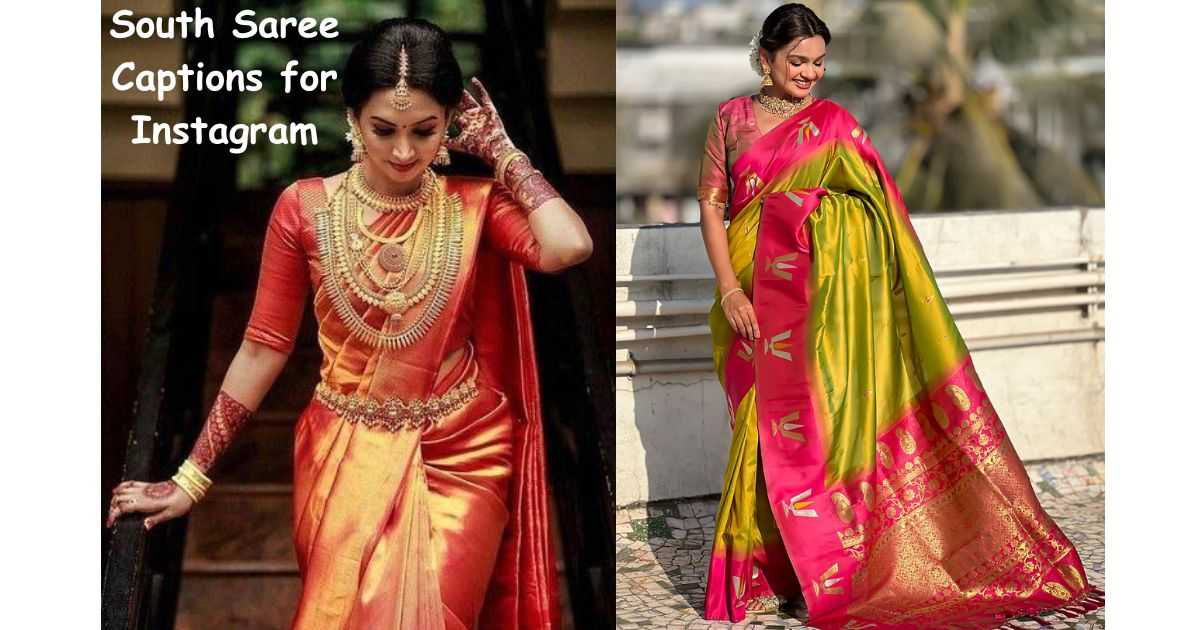
You’re ready. The silk is on, the pleats are sharp, and someone just took a photo that actually looks like you. Then comes the caption box. Blank. Blinking. Waiting.
Here’s the thing — you don’t need something profound. You need something true. True to the photo, true to the mood, true to what wearing that particular saree on that particular day actually felt like.
That’s the only filter worth applying.
One Thing Worth Knowing Before You Scroll
The caption that works is the one that matches what the photo is doing — not just what the saree looks like. A soft, still photo needs a quiet line. A mid-laugh candid needs something real and a little loose. A sacred puja morning needs intention, not performance.
Spend five seconds looking at the photo before picking a caption. Everything after that becomes easier.
When the Photo Is Quiet and the Caption Should Be Too
These are for the soft, considered photos — good light, still pose, the kind of image that doesn’t need noise underneath it. Not short for the sake of brevity. Short because that’s what the moment needs.
The silk already said it.
Worn and completely known.
Ancient patterns, present moment.
Every fold holds something.
Thread by thread, generation by generation.
Light on old gold.
Still. Silk. Everything.
Woven long before I arrived.
Captions That Carry Culture Without Sounding Performative
There’s a version of cultural pride that sounds like a school essay. Then there’s the version that sounds like something you’d say to a friend who asked why you love wearing silk. These aim for the second.
South Indian silk has outlived every trend that tried to replace it.
The loom took weeks. The drape took thirty minutes. The feeling is permanent.
Kanjivaram wasn’t made for ordinary days — so I stopped having ordinary days.
There’s a reason this silk has survived centuries. I feel it every time.
My culture doesn’t need a filter. But here’s a caption anyway.
Heritage isn’t something you perform. It’s something you just put on.
Not everything worth wearing comes with a price tag you forget quickly.
The women in my family wore this like armor. I’m still learning that walk.
South Saree Captions With Emojis
The emoji should finish the caption, not decorate it. Each one here is placed where it actually earns its spot.
Temple morning, silk on 🙏🏽✨
Six yards and a full heart 💛🌺
South Indian silk doing exactly what it does 🔥👑
The border carried the whole look 🌾💫
Festive mood, no filter needed 🌸✨
Wrapped in roots tonight 🪡💛
Kanjivaram hit different this time 🌟🙏🏽
Silk and good light — that’s the whole post 🌞🫚
When the Saree Belonged to Someone
Not for every post. For the specific one where the saree came from somewhere real — a mother’s wardrobe, a grandmother‘s trunk, a woman whose hands you still remember.
She chose this color before I was born. Wearing it today felt like meeting her.
Amma draped it. I didn’t move a single pleat after.
Her hands set these folds. I kept every one exactly where she left them.
This silk has been to more family moments than I have.
Borrowed from the woman who taught me that dressing well is a form of respect.
Paati would have fixed my blouse and said nothing else. That was her version of a compliment.
Wearing her love is the only way I know how to carry it forward.
Some pieces in a wardrobe are clothes. Some are conversations with people you miss.
Funny South Saree Captions
Anyone who has worn a saree has a story. The pleats, the pins, the stairs, the moment someone whispers “just sit very carefully.” These captions are for that version of the day.
Three attempts at the pleats. The smile in the photo is genuine relief.
The saree said float through the room. My feet requested a meeting.
Graceful is the word. Standing very still is the method.
The silk cost what it cost and I will not be taking questions.
Tried to walk fast. The saree had a completely different itinerary.
She looks like she glides everywhere. She also hasn’t sat down in four hours.
Six yards of fabric and a complete inability to board a bus normally.
Bought it for a wedding two years ago. Wore it on a Wednesday. No notes.
South Saree Captions in Hindi — दिल से लिखी
रेशम पहना तो लगा, जड़ें भी पहन लीं। Wore the silk, felt like I wore my roots too.
माँ ने पहनाया — आँखें भर आईं, शब्द नहीं मिले। Mom draped it. Eyes filled. Words didn’t come.
छह गज में पूरी पहचान समाई है। Six yards hold an entire identity.
दक्षिण भारत की रेशम का कोई जवाब नहीं। Nothing compares to South Indian silk.
ये साड़ी बस कपड़ा नहीं — पीढ़ियों की थाती है। This saree isn’t just fabric. It’s a generational inheritance.
पहनते ही लगा, ये तो हमेशा से मेरी थी। The moment I wore it, it felt like it was always mine.
रेशम का रंग बताता है, घर कहाँ है। The color of silk tells you where home is.
आज का दिन साड़ी का — बाकी सब बाद में। Today belongs to the saree. Everything else can wait.
Read also: 150+ Saree Captions in Marathi for Instagram — Every Mood Perfect
South Saree Marathi Captions — मनातून आलेल्या ओळी
साडी नेसताना वाटलं, आजी सोबत आहे। Draping the saree felt like grandmother was right beside me.
रेशमाचा स्पर्श आणि मनाची शांती — दोन्ही एकत्र मिळतात। The touch of silk and peace of mind arrive together.
दक्षिणेची रेशीम साडी — एकदा नेसलीस की विसरत नाही। South Indian silk — once you wear it, you never forget.
परंपरा जगणं म्हणजे नक्की हेच। Living tradition looks exactly like this.
सहा वार साडीत एक वेगळाच आत्मविश्वास असतो। A six-yard saree carries a confidence that nothing else does.
साडीत जी शान आहे ती शब्दांत मांडता येत नाही। The dignity of a saree simply cannot be put into words.
आजीची साडी — आयुष्यातला सर्वात मौल्यवान वारसा। Grandmother’s saree — the most precious inheritance of my life.
रेशमाचे धागे बोलतात, ऐकायला हवं। Silk threads speak. You just have to listen.
Festival and Puja Day South Saree Captions
The feeling of dressing for a sacred day is genuinely different from dressing for a party. These are written for that specific morning energy — intentional, grateful, grounded.
Puja mornings feel different when the silk is right.
Not every prayer needs folded hands. Some need six yards and intention.
Sacred days deserve the good silk. Today got it.
Wore the saree, said the prayers, felt completely held.
Festive isn’t a look. It’s a feeling the right drape brings.
The divine and the gold border both showed up today.
Silk for the festival. Gratitude woven into every fold.
Dressed for something bigger than the occasion.
For the New Saree You Just Brought Home
This is unboxing excitement, fresh silk smell, and the slightly guilty joy of a purchase that was absolutely worth it. Different energy from every other section here — lighter, happier, no nostalgia involved.
Unwrapped it. Wore it. The wardrobe has no complaints.
She said don’t impulse buy. She hasn’t seen this silk in person.
New Kanjivaram just joined the family. Fits right in.
The receipt stung for exactly one moment. The first wear fixed that.
Bought it before logic arrived. Best possible outcome.
Fresh silk, fresh week, no explanation needed.
It was calling from across the store. I answered. Responsibly-ish.
New saree, same girl who will always choose silk over sense.
When You Wore It on a Regular Day for No Reason
The no-occasion saree post is its own thing entirely. No wedding backdrop, no festival lighting — just a person who decided today was worth the good silk. That confidence deserves a caption that matches it.
No wedding. No festival. Just a silk Tuesday.
Wore the good one on a random day. Highly recommend.
The calendar said ordinary. The silk disagreed.
Randomly draped and completely meant every pleat.
Wednesday needed this more than the wedding did.
The saree doesn’t wait for permission and neither do I.
No reason needed. That was always the point.
Wore it because I felt like it. That’s the whole story.
First Time Wearing It Alone
The first time you drape a saree yourself and it actually looks right is a very particular feeling. Not borrowed nostalgia, not family history — just you, the mirror, and a quiet moment of getting something right.
Wore it alone for the first time. The mirror approved.
First time the drape looked exactly how I’d always pictured it.
Turns out it was always going to fit. I just needed to try.
Six yards and I finally understood what everyone was talking about.
Took years to attempt. Took minutes to feel completely at home.
First drape. Many more ahead. No going back from this.
She said I’d love it one day. Today was that day.
It fits like it was waiting for me to be ready.
Read also: 140+ Saree Captions in Hindi for Instagram — Every Mood, Every Moment
English South Saree Captions for instagram
These aren’t poetic. They’re not trying to be deep. They’re just confident, clean lines that sound like someone who knows what they’re wearing and feels good about it.
A South Indian saree never needs an occasion — it creates one.
The silk is from the loom. The attitude is entirely mine.
You don’t just wear a Kanjivaram. You carry it.
This drape took time. Everything worth wearing does.
South Indian silk makes you walk like you own the room.
Tradition isn’t old-fashioned when you wear it with intention.
Some women wear power suits. I wear six yards of silk.
I didn’t choose the saree life. It chose me at birth.
Three Things That Quietly Ruin a Good Caption
Worth two minutes because these mistakes are subtle enough that you won’t notice them until you look back at old posts.
The energy mismatch is the biggest one. A genuinely joyful, laughing photo with a heavy emotional caption underneath creates a disconnect people feel without being able to name it. They keep scrolling. Whatever the photo is doing, the caption should be doing the same thing.
The second is using a line that’s already everywhere. Certain captions had a great run and retired themselves. When the caption blends into thousands of other posts, your photo gets lost with it. One specific detail — the exact color, who draped it, where you wore it — makes even a three-word caption feel completely yours.
Third is writing for reaction instead of truth. The captions that actually get saved are the ones that feel like the person meant them. Not the ones that were built to perform.
Questions People Actually Ask
Should I name the saree type in the caption?
If you know it, yes. Writing Kanjivaram, Pochampally, Chettinad cotton, or Mysore silk shows you know what you’re wearing. People who love textiles notice it immediately and often start real conversations in the comments.
Can the caption mix two languages?
Not only can it — it often works better that way. A line in Tamil or Hindi followed by one in English reaches two audiences and feels authentic rather than forced. It’s also how many Indian people actually think.
Long caption or short?
One to two lines is the sweet spot for most posts. If the saree carries a real story — it belonged to someone, you wore it for a meaningful first — three to four lines is fine. Beyond that, most people won’t read past the more button.
Is humor okay for something as traditional as a saree?
It’s not just okay — sometimes it’s the best choice. The posts that get the most comments are usually the ones where someone was honest about the struggle. Saree humor is specific enough to feel genuine and universal enough to reach everyone who’s ever worn one.
What if I’m not South Indian — can I still use these?
Appreciation is always genuine. “Fell in love with Kanjivaram silk today” is warm and real. The line between appreciation and overclaiming is just honesty — and you already have that if you’re asking the question.
You already did the hard part. You wore the silk, you found the light, and someone took a photo that looks like you on a good day.
The caption is just the last honest thing you add before you post. Pick the one that sounds like you said it — not like you searched for it. That’s the one people will actually remember. 🌸

My name is Amit, and I write captions, quotes, status lines, and short messages that feel natural and easy to use. My focus is on real emotions, clear words, and everyday moments people actually share. I care about meaning more than trends, and I write to help people express themselves honestly, without sounding forced or copied.